In a nutshell
- 🧠 Clutter overwhelms by taxing attention through cognitive load, decision fatigue, and emotional ties, turning every surface into a lingering to-do.
- ⚖️ Why big clear-outs aren’t always better: Blitzes bring quick wins but often rebound; sustainable change comes from small, repeatable habits that respect daily rhythms.
- 🧺 Daily micro-habits: set container limits, use a Two-Minute Rule, create an exit station, and run quick evening surface resets for steady gains.
- ⏱️ Behavioural cues: anchor actions to routines (kettle, arrival, bedtime) with time-boxing and pre-set rules (e.g., 60-day clothing rule) to make decisions automatic.
- 🔁 Focus on maintenance over spectacle: one-in/one-out, tiny daily donations, and digital declutter steps compound into calmer, self-sustaining order.
Clutter rarely feels neutral. It steals minutes, fogs judgement, and quietly drains joy from ordinary rooms. In interviews across the UK—from studio flats in Manchester to suburban semis in Kent—I’ve seen how stuff sprawl collides with busy diaries and shrinking storage. The result is a loop: stress prompts postponement, postponement invites more mess, and the mess loops back into stress. Breaking that cycle isn’t about heroic weekend clear-outs; it’s about tiny, repeatable wins that rewire daily defaults. Below, I unpack why clutter feels so psychologically heavy and offer simple, five-minute tactics you can apply each day without derailing work, childcare, or your sanity.
The Psychology of Clutter and Cognitive Load
Clutter is not just visual noise; it’s a tax on attention. Every item in view asks a quiet question—keep, bin, store, decide later?—triggering decision fatigue. Neuroscience researchers describe this as cognitive load: your brain must filter stimuli before it can focus. Add attentional residue (the lingering mental tabs from unfinished tasks) and the simplest choice—where to put the post—becomes surprisingly hard. When every surface becomes a to-do list, your mind never fully clocks off.
Behavioural economics worsens the jam. The endowment effect nudges you to overvalue what you own, while loss aversion makes it feel riskier to let an item go than to keep it “just in case.” We also anchor on past prices (“But it cost £60!”) and imagine future utility (“I’ll fix it in June”). These biases are normal, but they multiply when items are scattered and choices are numerous.
There’s also a social and emotional layer. Gifts carry obligation, hobby gear carries identity, and paperwork carries fear of missing something important. The fix isn’t to shame yourself. It’s to shrink decisions, limit visual inputs, and stage easy exits—small structural changes that lighten the brain’s lift.
Why Big Clear-Outs Aren’t Always Better
There’s romance to the weekend blitz: a boot full of charity-shop bags, a triumphant selfie beside pristine shelves. Yet giant declutters often fail to stick because they ignore the rhythms that created the mess. A single heroic push can spawn days of rebound fatigue, while new purchases creep back because habits didn’t change. The bin day comes and goes, energy dips, and the hallway swallows shoes again.
Consider the Pros vs. Cons of the blitz. Pros: visible progress, momentum, and clear space fast. Cons: exhaustion, decision burnout, and disruption that can spark conflict in shared homes. For renters or busy families, the collateral chaos—boxes everywhere, a car run to the tip—can be impractical mid-week. The alternative is unflashy but powerful: micro-actions embedded in routines. Ten minutes nightly beats two punishing hours monthly because the system, not willpower, carries the load.
The goal is maintenance over spectacle. If a wardrobe turns over gradually—with a “one in, one out” rule and a small “donate” tote by the door—you cut clutter at the source. It’s quieter change, but it sticks because it respects your calendar, energy, and space.
Simple Daily Habits That Shrink Mess in Minutes
Think friction, not perfection. The easiest home stays tidy because the next right action is obvious and close at hand. Start by setting container limits: one tray for post, one basket for chargers, one caddy for bathroom spares. When a container fills, something must leave. Pair that with a Two-Minute Rule: if a tidy task takes under two minutes—hanging a coat, filing a receipt—do it immediately. The act interrupts clutter’s “later” loop and removes a nagging tab from your mind.
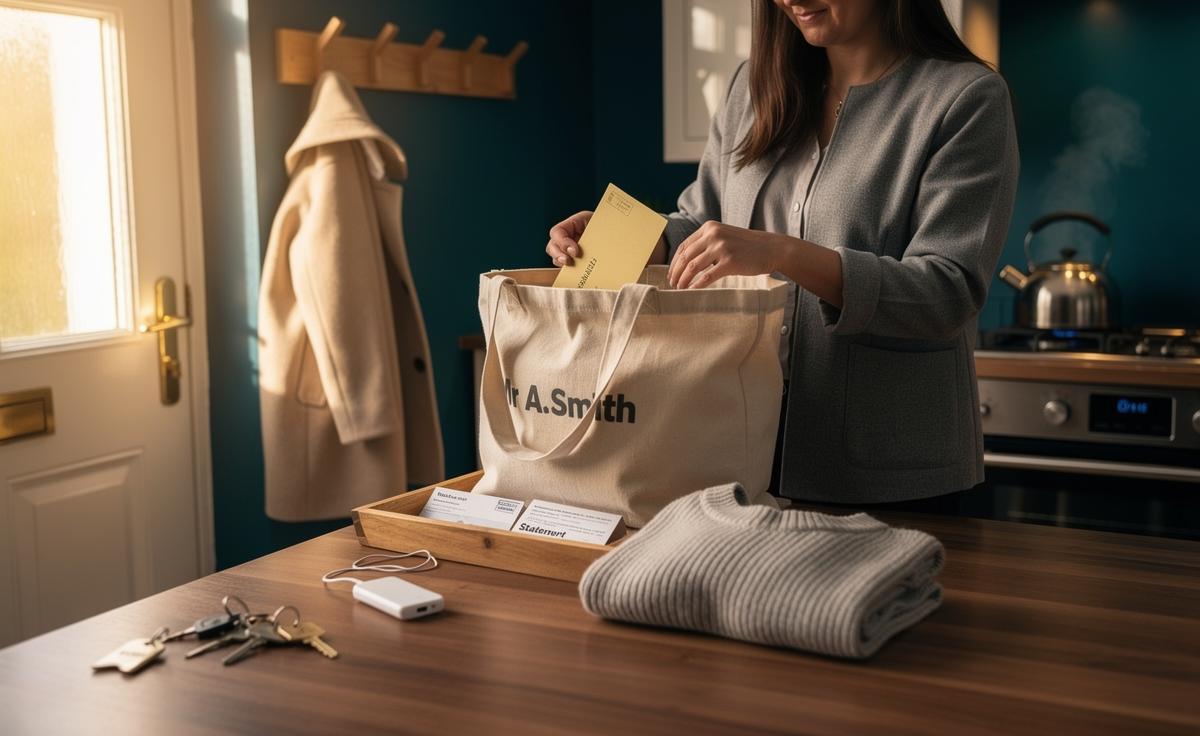
Create an exit station by the front door: a tote for donations, a folder for returns, and a small jar for rogue screws or keys. Add surface resets: clear the kitchen counter and coffee table every evening to a preset baseline. Digital clutter counts too—delete five emails, archive one folder, unsubscribe once. These micro-wins compound and teach your brain that order is normal, not exceptional.
- One-In, One-Out: New jumper in, old jumper to donate.
- Evening Sweep: Ten stray items home in five minutes.
- Laundry Triage: Fold visible items only; stash the rest in a “process later” bag to avoid stall-outs.
- Room Cues: Keep a mini-bin and cloth where mess occurs (desk, hallway).
A Ten-Minute Plan Backed by Behavioural Cues
Rituals beat motivation. Anchor a short declutter to a fixed cue: after the kettle boils in the morning, after washing up at night, or after arriving home. When tidy time piggybacks a habit you already do, the action becomes automatic. Use time-boxing—set a two- or five-minute timer—to cap effort and avoid overwhelm. And script tiny decisions in advance: “Receipts go in the blue folder,” “Unworn clothes for 60 days go to charity,” “Paper manuals are recycled after warranty.”
The table below maps common triggers to micro-actions and notes why they stick. Try one row per day for a week, then repeat the best two.
| Trigger | Micro-Action (≤2 min) | Why It Works |
|---|---|---|
| Kettle boiling | Sort today’s post into: action, file, recycle | Temporal anchor makes sorting habitual; visual pile shrinks |
| Returning home | Hang coat, empty bag, drop one item in donate tote | Reduces entry clutter; daily exit of one item compounds |
| Bedtime | Reset one surface (desk or coffee table) | Morning starts with clear cue of order, reinforcing habit |
Clutter overwhelms because it’s a mesh of psychology, logistics, and emotion; any solution that ignores one strand frays quickly. By shrinking decisions, setting container limits, and attaching micro-actions to daily cues, you create a home that tidies itself in the background. Your space stops shouting, your calendar relaxes, and your attention returns to the people and projects that matter. What’s the smallest, repeatable action you can embed today—one that future you will notice every morning without lifting a finger?
Did you like it?4.7/5 (23)