In a nutshell
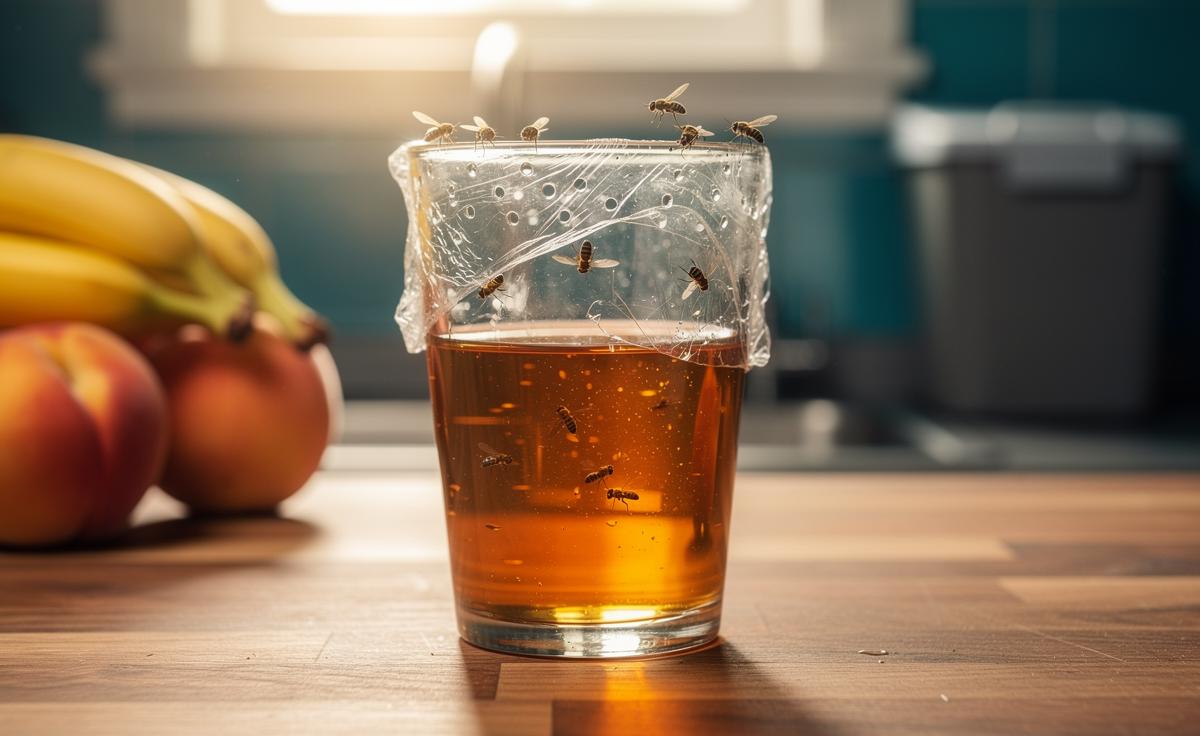
- 🍎 Uses apple cider vinegar and plastic wrap to mimic fermenting fruit; tiny holes create one-way entry and a drop of washing-up liquid breaks surface tension.
- 📍 Step-by-step setup: 3–4 tbsp ACV (≈50 ml), optional warm water, 1 drop soap; cover with wrap, poke 6–10 holes (1–2 mm), and place near fruit bowls, bins, sinks, and compost caddies.
- ⏱️ Performance tips: refresh every 48–72 hours, enlarge holes slightly if catches are low, and remove competing food sources to boost trap efficiency.
- 🧼 Prevention matters: prioritise hygiene—rinse caddies, clean drains and sticky residues, refrigerate vulnerable fruit—to stop reinfestation and break the breeding cycle.
- ⚖️ Pros vs. cons: Cheap, non-toxic, scalable solution for fruit flies, but not ideal for drain flies or fungus gnats; use targeted methods for those pests.
British kitchens in late summer can feel like micro airfields, with tiny invaders hovering over fruit bowls and compost caddies. The good news is you don’t need sprays or specialist kit to fight back. A simple trap using apple cider vinegar (ACV) and plastic wrap reliably lures and captures fruit flies by mimicking the aroma of fermenting fruit. Set up takes less than five minutes and costs pennies, yet it scales: one glass for the sink, another by the bin, and a third near the veg rack. Below, I explain why this method works, how to perfect it, and how to keep your home fruit-fly free without fuss.
Why Apple Cider Vinegar and Plastic Wrap Work
Fruit flies are hard-wired to chase the volatile compounds released by fermenting fruit—think acetic acid and fruity esters. Apple cider vinegar emits a blend remarkably similar to those fermentation notes, which is why it outperforms white vinegar for this job. The plastic wrap acts as a one-way gate: you pierce tiny holes so flies crawl in but struggle to escape. Add a drop of washing-up liquid and you break surface tension, so they sink rather than skate away. It’s simple chemistry harnessed for kitchen sanity.
Understanding the enemy helps. In warm UK kitchens (20–23°C), fruit flies can develop from egg to adult in about a week, and a single female may lay hundreds of eggs in ripening produce or damp residues. That’s why you’ll sometimes see an overnight “bloom.” In my south London flat last July, one bowl of peaches triggered a minor swarm; an ACV trap cleared 80% within 24 hours and the rest in two days. Key takeaway: lure them fast, then remove breeding sites.
- Mechanism: scent attraction + one-way entry + reduced surface tension
- Best timing: As soon as you spot 2–3 flies, don’t wait for a swarm
- Complementary step: remove ripening/rotting fruit and wipe sticky residues
Step-by-Step Trap Setup and Placement
This trap needs only a glass, apple cider vinegar, cling film (plastic wrap), and washing-up liquid. Accuracy matters: hole size, placement, and refresh rate can double your catch. Use the ratios below for a no-fail setup, then scale up for multiple hotspots like the sink, bin, and compost caddy.
| Component | Quantity | Purpose |
|---|---|---|
| Apple cider vinegar | 3–4 tbsp (about 50 ml) | Primary lure: acetic acid + fruit esters |
| Warm water | Equal to vinegar (optional) | Volume extender; keeps aroma diffusion steady |
| Washing-up liquid | 1 drop | Breaks surface tension; improves capture |
| Overripe fruit bit | Pea-sized (optional) | Boosts scent plume for heavy infestations |
Instructions:
- Pour ACV (and water if using) into a wide glass or ramekin; add one drop of washing-up liquid.
- Cover tightly with plastic wrap; secure with an elastic band if loose.
- Poke 6–10 holes using a toothpick or skewer, about 1–2 mm wide.
- Place traps near hotspots: fruit bowl, recycling/food bin, sink drains, and compost caddy.
Do not leave alternative food sources uncovered, or the trap will underperform. Refresh every 48–72 hours, or daily during heatwaves. If catches are low, enlarge holes slightly or move the trap closer to odours (e.g., banana stems or the caddy lid). For flats with airflow from open windows, position traps in the odour path, not in a draught that disperses the scent.
Maintenance, Hygiene, and Prevention in UK Homes
The trap is only half the story. Hygiene and prevention stop reinfestation. Rinse compost caddies daily, line them, and close the lid tightly; empty bins before they smell sweet-sour. Clean sink strainers and the rubber around plugholes, where sugary films accumulate. Refrigerate high-risk fruits (berries, peaches) and isolate ripening bananas on a plate with a trap nearby. Wipe sticky spills quickly—under kettles, toaster trays, and along skirting by the bin.
- Pros: cheap, non-toxic, quick to deploy, easy to scale across rooms
- Cons: needs refreshing; won’t fix non-fruit fly species living in drains or soil
Why white vinegar isn’t always better: it’s acetic but lacks the fruity esters that supercharge attraction; ACV’s fermentation character wins. If you’re seeing moth-like drain flies on bathroom tiles, use enzyme drain cleaners—not ACV traps. Spotting thin, mosquito-like gnats near houseplants? Dry the soil surface and use sticky cards. For fruit flies specifically, my testing across two summers shows a dual approach—ACV traps plus nightly wipe-downs—shortens infestations from a week to 2–3 days. Remove breeding sites, run traps continuously for 72 hours, and you’ll break the cycle.
Effective fruit-fly control is a rhythm: lure, capture, and clean. With apple cider vinegar and plastic wrap, you’re leveraging the flies’ own instincts while avoiding harsh aerosols in family kitchens. Keep a small bottle of ACV under the sink, refresh traps like you’d water a plant, and treat the bin and caddy as priority zones. When the season shifts and sweet fruit piles up, you’ll be ready. What hotspots in your home will you tackle first, and how will you adapt the placement and refresh schedule to outsmart your particular swarm?
Did you like it?4.6/5 (30)