In a nutshell
- 🍌 The banana peel hack uses natural enzymes, pectins, and lipids to hydrate and soften dry, cracked heels, serving as a supportive pre-treatment.
- 🔬 How it works: humectants bind water, gentle enzymatic exfoliation loosens dead cells, and light occlusion reduces TEWL—useful but not a replacement for clinical actives.
- 🧭 Step-by-step: clean feet, rub inner peel 1–2 minutes, mask 10–20 minutes under socks, rinse, then apply 10–25% urea or salicylic acid balm; repeat 2–3 times weekly with good hygiene.
- ⚖️ Pros vs. Cons: low-cost, low-waste and non-abrasive softening vs. messiness, potential irritation, and limited effect on severe fissures; pairing with proven balms works best.
- 🩺 When to seek help: painful or bleeding fissures, infection signs, or conditions like diabetes require podiatry/NHS guidance; consistency beats over-exfoliation.
Cracked heels are the quiet saboteurs of comfort: fine at the desk, agony on the pavement. In a season of frugal, eco-minded fixes, one tip keeps peeling its way back into conversation—the banana peel hack. Fans claim the fruit’s natural enzymes and humectants soften thickened heel skin, reducing fissures without pricey potions. Skeptics counter that kitchen cures rarely match clinical-grade actives. As a UK journalist who tests trends for a living, I tried it, spoke with dermatology sources, and reviewed the chemistry. The verdict? It’s not magic—but it can be remarkably helpful when used wisely, hygienically, and alongside proven footcare.
The Science Inside Banana Peel that Helps Heels
Banana peels are biochemical grab bags: they contain enzymes (notably amylases), polysaccharides (pectin), antioxidants (polyphenols, carotenoids), trace lipids, and minerals such as potassium. Together, these can support skin in two ways. First, the sugars and pectins act as gentle humectants, helping bind water to the stratum corneum so heels feel less brittle. Second, mild enzymatic activity may assist with non-abrasive exfoliation, loosening dead skin without harsh scrubbing. There’s also an occlusive effect: the waxy inner peel creates a shield that slows water loss. None of this replaces targeted keratolytics like urea or salicylic acid, but it can smooth a rough surface and prepare skin to receive them.
What does the evidence say? Lab analyses consistently show antioxidant and polysaccharide content, which supports barrier comfort, yet clinical trials on cracked heels specifically are scarce. Think of the peel as a support act, not the headline performer: helpful for maintenance or mild dryness, less so for deep, painful fissures. Dermatology experts regularly stress that moisturising plus smart exfoliation delivers the best results. If you’re on your feet all day or winter-ravaged by central heating, the peel can be a low-cost pre-mask before your heel balm, rather than a stand-alone cure.
| Component | Skin Role | Evidence Strength | Best Use |
|---|---|---|---|
| Enzymes (amylases) | Very mild exfoliation | Biochemical plausibility; limited clinical data | Softening before balm |
| Pectins & sugars | Humectant, water-binding | Supported by lab assays | Short occlusive mask |
| Polyphenols | Antioxidant, soothing | Well-documented in peels, not heel-specific | Comfort, anti-tightness |
| Lipids/waxes | Light occlusion to reduce TEWL | Plausible, limited quantification | Seal-in moisture |
| Potassium | Supports hydration balance | Indirect benefit | Adjunct to moisturisers |
Step-by-Step: the Banana Peel Heel Treatment
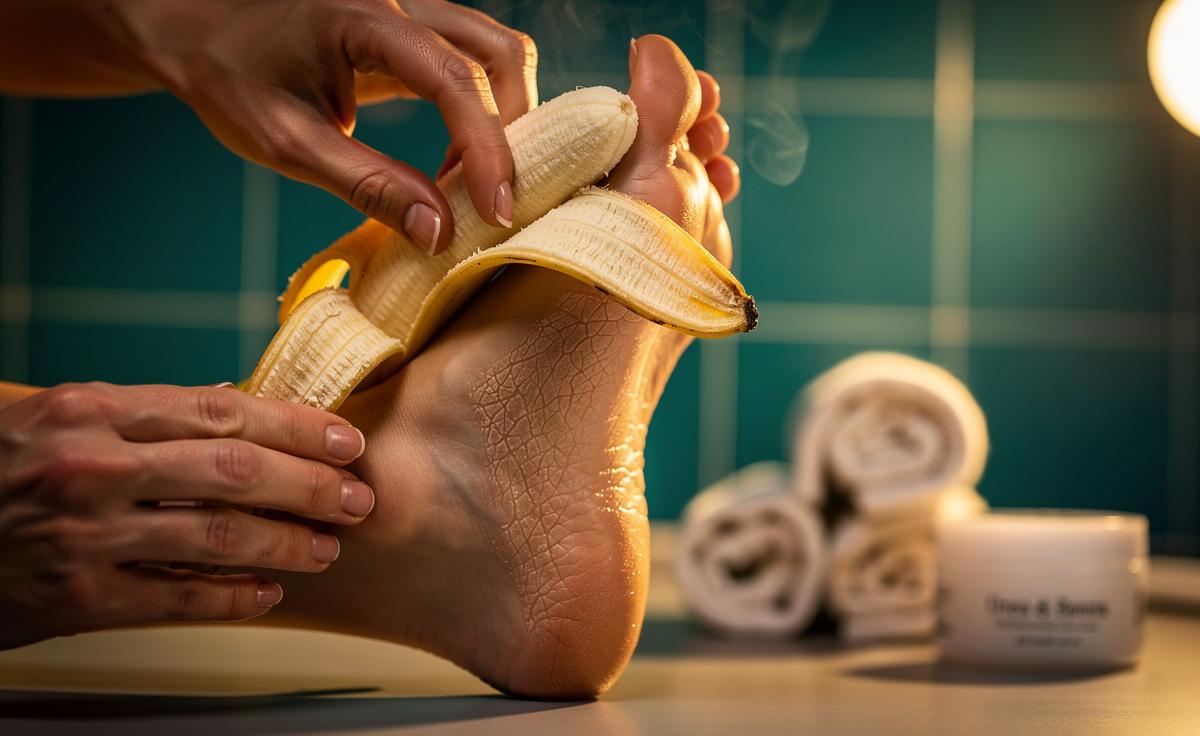
Start clean. Wash and pat your feet dry so the peel contacts skin, not dirt. Choose a ripe, not mushy, banana; the inner peel is richest in moisture-binding compounds. Patch-test a coin-sized area first. Do not use on open cracks, bleeding fissures, or if you have diabetes or poor circulation without medical advice. Gently glide the inner peel over your heels for 1–2 minutes, then press a fresh segment against each heel like a mask. Slip on old socks to hold it in place (and to avoid skating across the kitchen). Leave on for 10–20 minutes; longer isn’t better—sugar can get sticky and unhygienic.
Rinse with lukewarm water and pat dry. Immediately follow with a proven heel balm—look for 10–25% urea or salicylic acid—to lock in the hydration you’ve just created. Use the hack two or three evenings per week for maintenance, or the night before a long run, hike, or event. Dispose of the peel in food waste, then wash hands and the floor—safety first. If you enjoy gadgets, a soft foot file can be used the next morning (on dry skin) after the peel night to lift sloughed cells without over-scrubbing.
- Frequency: 2–3 times weekly alongside daily balm
- Time: 10–20 minutes per session
- Pair with: Urea or salicylic acid cream; cotton socks
Pros vs. Cons of the Banana Peel Hack
As with most viral remedies, the banana peel delivers best when framed as a helper, not a hero. In my own winter test, heels that felt like sandpaper on Monday were noticeably softer by Thursday when I paired the peel with a 20% urea balm. The peel alone gave a short-term glow; the combo kept cracks at bay. Still, not all skin loves fruit acids and enzymes, and the stickiness is real. Below is a clear-eyed snapshot so you can choose wisely.
- Pros
- Low-cost, low-waste; uses something you might bin
- Gentle hydration and softening from pectins and sugars
- Occlusive effect primes skin for therapeutic balms
- Non-abrasive alternative to aggressive foot files
- Cons
- Messy; can be slippery and sticky
- Potential irritation if you’re fruit- or latex-sensitive
- Limited evidence for severe fissures; not a medical treatment
- Hygiene matters—sugary residue can attract microbes if not washed off
If your heels are painful, bleeding, or infected, stop DIY and seek professional care. For athletes, hospitality workers, and anyone clocking 10,000 steps-plus, think of this hack as part of a weekly ritual—alongside supportive footwear, regular balm use, and short showers instead of scorching soaks that strip oils.
When a Home Fix Isn’t Enough
Home remedies meet their match with deep cracks, underlying skin disease, or systemic risk factors. Red flags include bleeding fissures, signs of fungal infection (itch, scaling between toes), eczema or psoriasis flares, numbness, or delayed healing. People with diabetes or peripheral vascular disease face higher complication risks—blisters and cracks can escalate. In such cases, UK podiatrists typically recommend targeted emollients (look for urea 25–40%), strategic keratolytics under guidance, periodic debridement, and footwear tweaks (closed heel, cushioned insoles). NHS advice also leans on protecting skin integrity, not just polishing it.
If you want a science-forward routine, try this ladder. Step 1: daily urea-based heel balm plus cotton socks at night. Step 2: gentle weekly use of a foot file on dry skin—never saw at wet, swollen tissue. Step 3: add the banana peel as a pre-balm hydrator on off-nights, or swap in a lactic acid lotion if you prefer shelf-stable certainty. Step 4: if cracks persist two weeks, escalate to a podiatry appointment. Consistency beats intensity; the goal is steady barrier support, not occasional over-exfoliation. Keep showers short, pat—not rub—feet dry, and moisturise within three minutes to trap water.
This humble hack works because it respects skin biology: hydrate, soften, then seal. The natural enzymes and humectants in banana peel can nudge rough heels toward comfort, especially when harnessed with proven actives and sensible footwear. It’s cost-effective, planet-kind, and—when handled hygienically—surprisingly satisfying. But kitchen wisdom shouldn’t eclipse clinical care for stubborn or painful cracks. If you try it, track results for two weeks, then adjust. Your feet carry you through the day; give them the science and softness they deserve. What will your next step be—peel, balm, podiatrist, or a smart blend of all three?
Did you like it?4.6/5 (27)