In a nutshell
- 🔬 The synergy of raw honey enzymes (e.g., glucose oxidase) and oat actives (beta‑glucan, avenanthramides) quickly calms redness, lightly cleanses, and boosts surface hydration.
- ⏱️ A five‑minute method: mix 1 tbsp raw honey with 1–2 tsp finely ground oats/colloidal oatmeal, apply a thin layer on damp skin, rinse with lukewarm water, and patch test first; avoid hot water to preserve enzyme activity.
- ⚖️ Pros vs. Cons: DIY is fresh, customisable, and costs ~£0.50 per use, but enzyme potency varies and pollen may irritate; colloidal oatmeal offers more consistent, gentle results.
- 🩺 Dermatology view: colloidal oatmeal is an OTC skin protectant; medical‑grade honeys inform the calming effect, but the mask isn’t sterile—use 1–3 times weekly and stop if burning, hives, or tightness persist.
- 🔧 Smart tweaks: acne‑prone skins keep contact under 5 minutes; eczema‑prone prioritise colloidal oatmeal; for barrier repair add a drop of squalane and seal with a fragrance‑free moisturiser.
When winter wind bites or central heating saps moisture, a kitchen remedy quietly earns its cult following: the honey and oatmeal mask. This unassuming duo works in minutes, soothing flare‑ups and supporting repair with a cocktail of natural enzymes, beta‑glucans, and skin‑friendly sugars. Raw honey brings bee‑made enzymes that gently nudge skin back to balance, while finely ground oats lay down a comforting film that tamps down itch and tightness. The magic is not folklore alone; it’s chemistry you can feel. Five minutes can be enough to defuse redness without overwhelming the skin barrier, a godsend on busy mornings or before a Zoom call.
How Natural Enzymes Heal Skin in Minutes
Raw honey is not just sweet; it’s bioactive. Bees add glucose oxidase, which slowly releases micro‑doses of hydrogen peroxide in a moist environment—enough to confer a gentle cleansing effect without the burn of astringents. Other honey enzymes, such as diastase and invertase, help break down complex sugars into humectants that bind water at the surface, softening rough patches. On contact, these constituents create a micro‑occlusive layer that helps the skin retain hydration while remaining breathable. Because these enzymes are heat‑sensitive, lukewarm—not hot—water preserves their activity.
Oats play a complementary role. Finely milled or colloidal oatmeal is rich in beta‑glucan, a film‑forming polysaccharide that reduces transepidermal water loss, and avenanthramides, phenolic compounds celebrated for calming itch and visible redness. Together, honey’s enzymes and oat actives create a two‑step effect: a soothed surface environment and improved short‑term moisture retention. For sensitive or post‑shave skin, this synergy is notable: the mask cushions exposure while quietly reducing triggers that light up irritation pathways. The result isn’t a dramatic peel; it’s a fast, quiet reset that leaves skin comfortably pliant and subtly luminous.
A Five-Minute Method That Calms Redness
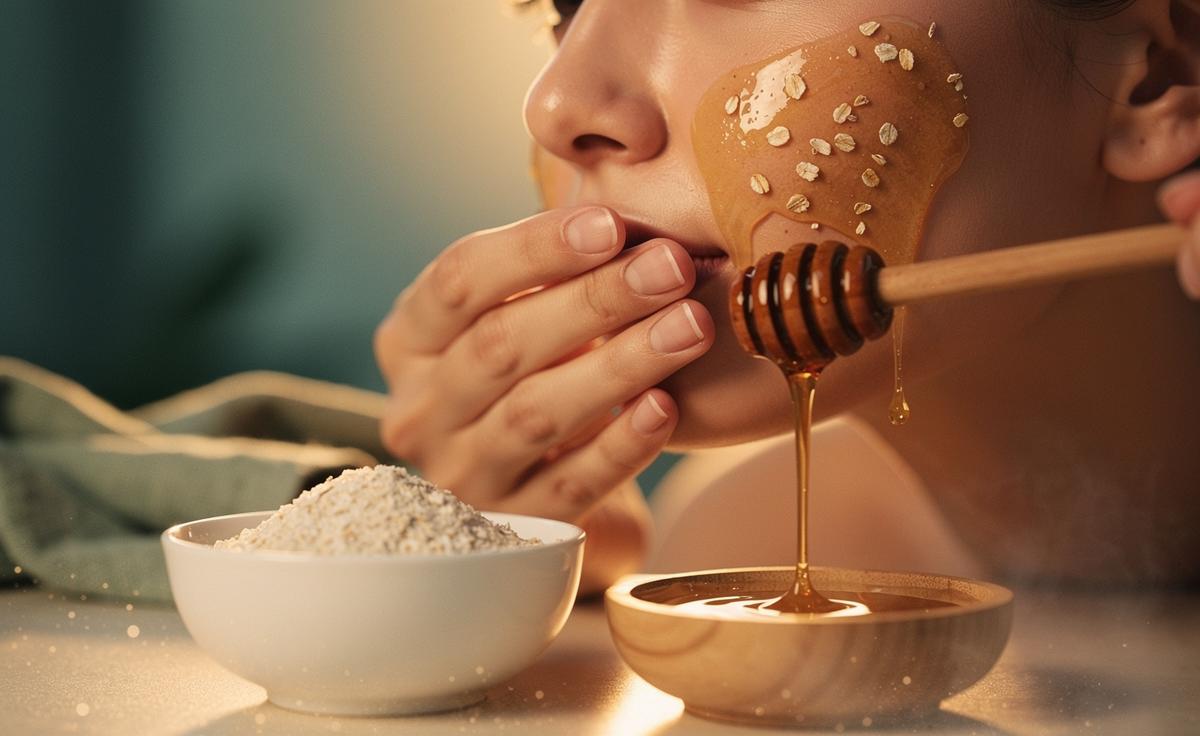
Stir 1 tablespoon of raw honey with 1–2 teaspoons of finely ground oats (or colloidal oatmeal) until you have a spreadable paste. Mist your face or splash with lukewarm water to prime the canvas. Smooth a thin veil over cheeks, nose, and forehead—areas prone to windburn or maskne. Five minutes is usually enough for sensitive skin; stretch to 7–8 if you tolerate actives well. Massage lightly as you rinse to loosen flakes, then finish with a plain, ceramide‑rich moisturiser. The quick cadence is the point: potency without prolonged exposure.
Why it works quickly: honey’s enzymes start acting on contact as oats form a comfort film, so you get immediate subjective relief (less sting, less pull) even before the sink is dry. Keep these principles in mind for best results: always patch test on the inner arm and avoid hot water, which can inactivate enzymes and provoke flushing. This routine is nimble enough for pre‑makeup prep or post‑run cool‑down, with no lingering stickiness if you rinse thoroughly.
- For acne‑prone skin: choose darker, lower‑water honeys (e.g., high‑pollen varieties) and don’t exceed 5 minutes.
- For eczema‑prone skin: prioritise colloidal oatmeal; keep the honey layer very thin.
- For barrier repair: add one drop of squalane to the mix for extra slip without fragrance.
Pros and Cons: Why DIY Isn’t Always Better
DIY wins on freshness, control, and cost—this mask routinely comes in under £0.50 per application. You sidestep fragrance and dyes, and you can tune texture for your skin on the day. Yet the kitchen route has caveats. Raw honey varies by season and hive, so enzyme activity isn’t standardised. Likewise, porridge oats are not equivalent to colloidal oatmeal; particle size matters for comfort and rinse‑off. And if you’re pollen‑sensitive, unfiltered honey may be too feisty for the cheeks, however well it works on the T‑zone.
| Ingredient | What You Get | Best For | Watch‑Outs |
|---|---|---|---|
| Raw honey | Active enzymes, humectant sugars | Quick redness reset, dry patches | Variable potency; pollen trace risk |
| Pasteurised honey | Smoother texture, fewer actives | Ultra‑sensitive skins needing blandness | Less enzyme benefit |
| Kitchen oats (finely ground) | Budget comfort film | Occasional use, body care | Grittier; can be harder to rinse |
| Colloidal oatmeal | Standardised particle size, soothing actives | Faces prone to itch, tightness, or flares | Costs a touch more per use |
Bottom line: home mixing shines for immediacy and minimalism, but standardised colloidal oatmeal makes results more repeatable. If you’re reactive, lean clinical on the oat side and artisanal on the honey side—small‑batch but lightly filtered—to find your comfort sweet spot.
What Dermatologists Want You to Know
Clinically, colloidal oatmeal is recognised as a skin protectant in over‑the‑counter formulations, thanks largely to beta‑glucan and avenanthramides that modulate signals linked to itch and redness. Meanwhile, medical‑grade honeys—think tightly controlled manuka variants—have documented benefits on specific wounds, which suggests why gentler, cosmetic use can feel so calming. That said, cosmetic honey is not a sterile dressing. Use the mask for complexion comfort, not for managing cuts, active infections, or severe dermatitis flares without professional guidance.
From a practical dermatology standpoint, frequency matters more than duration. Most skins do well with 1–3 applications weekly, and results accumulate as barrier function steadies. Red flags include tingling that escalates to burning, visible hives, or persistent tightness after rinsing—signs to stop and reassess. Keep these safeguards in mind:
- Patch test behind the ear or on the inner forearm for 24 hours.
- Rinse with lukewarm water only; hot water undermines enzyme benefits.
- Avoid on infants and around the mouths of children under one year.
- Pair with a fragrance‑free moisturiser to lock in gains.
I’ve tested variants in British winter and high‑humidity summers; the five‑minute formula holds up, especially for wind‑pinched cheeks after coastal walks. Consistency wins: little and often beats marathon masking.
In a beauty landscape crowded with acids and retinoids, the honey‑oat mask is a rare fast fix that also feels kind. It trades drama for reliability, using enzymes and beta‑glucans to nudge your skin toward calm in the time it takes to brew tea. If you give it a week of regular, short sessions, you’ll likely notice less tautness and a quieter flush. What’s your next step: will you keep it strictly two‑ingredient, or tweak the base with a drop of squalane or colloidal oats to design your own five‑minute rescue?
Did you like it?4.4/5 (20)