In a nutshell
- ✨ The eggshell hair mask uses powdered calcium carbonate as a micro-polish to smooth cuticles for overnight shine, with the eggshell membrane adding a light, film-forming finish.
- 🧪 Science & pH: An acidic base (pH ~4–5 via aloe and a few drops of ACV) helps flatten cuticles and avoids chalky build-up—aim to polish, not plaster.
- 📝 Method: Sterilise and micronise shells; mix 1 tsp powder + 2 tbsp aloe + 1 tsp light oil + 5–8 drops ACV; apply a thin coat to mid-lengths/ends overnight; rinse with an acidic finish.
- ⚖️ Pros vs. Cons: Pros—low-cost, silicone-free gloss, frizz reduction; Cons—grit or scalp irritation if poorly milled/overused; it’s not a bond-repair treatment.
- 🎯 Suitability & tips: Best on high-porosity hair; go sparingly on low-porosity or colour-treated strands; clarify every 2–3 uses; optional upgrades include panthenol or light proteins.
Some overnight hair hacks are little more than wishful thinking. Yet one kitchen-sourced ritual is quietly winning over beauty editors: the eggshell hair mask. The logic is disarmingly simple—powdered shells are rich in calcium carbonate, and when paired with a gentle acid and a film-forming base, they can leave strands looking glassy by morning. This isn’t a miracle protein treatment, nor a salon bond-builder, but a textural polish that flatters frayed cuticles and quenches dryness. Used thoughtfully, eggshell can act like a micro-buff and mineral glaze for hair, adding reflective shine without heavy silicones. Below, the science, the exact method, and what to expect by sunrise.
The Science of Calcium and the Hair Cuticle
Hair isn’t bone; it won’t “absorb” minerals and grow stronger overnight. But the way light bounces off the cuticle—those overlapping scales—determines whether hair looks matte or mirror-bright. Finely milled calcium carbonate, the main component of eggshell, can behave like an ultra-mild polishing agent when suspended in a hydrating base. Think of it less as nutrition and more as a cosmetic surface treatment: micro-particles appear to fill tiny irregularities, helping scales lie flatter so they reflect light evenly. The inner eggshell membrane—a thin film lining the shell—contains proteins and glycosaminoglycans that can form a subtle, flexible coating, reducing friction and snagging.
There’s a critical caveat. Hard-water calcium deposits famously cause dullness; you don’t want rigid mineral build-up. The difference here is particle size and pH. When the powder is micronised and paired with a slightly acidic medium (aloe gel, a touch of apple cider vinegar), it sits more like a temporary glaze rather than an alkaline crust. Acid-balance matters: a pH around 4–5 encourages cuticle closure and limits chalky residue. This is why a brief chelation or acidic rinse the morning after can lock in shine while removing any lingering grit. In short: polish, don’t plaster.
DIY Eggshell Hair Mask: Method, Ratios, and Safety
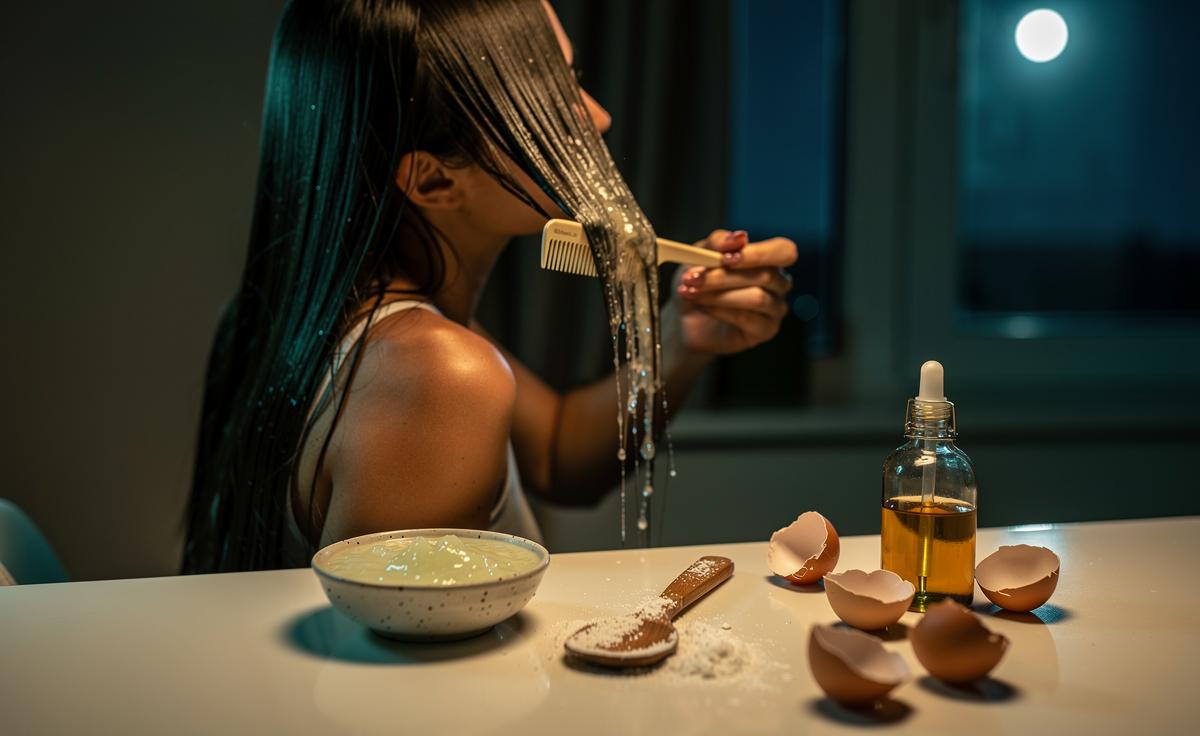
The mask is simple to make, but cleanliness and particle size are everything. Begin by rinsing shells thoroughly, then bake them at 160°C for 10 minutes to reduce microbial risk. Grind to a very fine powder—espresso-fine, not sandy. Blend 1 teaspoon of powder with 2 tablespoons of aloe gel, 1 teaspoon of a light oil (argan, camellia, or squalane), and 5–8 drops of apple cider vinegar to bring the mixture slightly acidic. Avoid the scalp if you’re sensitive, and never inhale the dry powder during grinding. Apply to mid-lengths and ends on damp hair, comb through gently, and cover with a breathable cap.
If you’re going truly overnight, use an old pillowcase and keep the mask thin—this is a veil, not spackle. Rinse in the morning with lukewarm water, then finish with a brief acidic rinse (1 teaspoon citric acid or vinegar in 500 ml water), followed by a light conditioner on ends. Skip this treatment if you have abrasions on the scalp, active dermatitis, or severe protein sensitivity. Because shells can harbour bacteria, don’t store the paste; make it fresh every time, and wash tools with hot soapy water.
| Step | Amount/Timing | Purpose |
|---|---|---|
| Sterilise & Grind | 160°C, 10 min; grind very fine | Reduce microbes; ensure smooth texture |
| Mix | 1 tsp shell + 2 tbsp aloe + 1 tsp light oil + 5–8 drops ACV | Create acidic, film-forming polish |
| Apply | Thin layer on damp mid-lengths/ends | Even distribution; avoid heaviness |
| Leave | 45–120 min or overnight (thin coat) | Allow cuticle-smoothing film to set |
| Rinse & Finish | Acidic rinse, light conditioner on ends | Remove residue; boost shine and slip |
Pros and Cons, Hair Types, and What to Expect Overnight
Done properly, the eggshell mask offers a quick visual upgrade. Most notice improved slip, less frizz at the canopy, and a glossier finish that survives a gentle blow-dry. In our newsroom trials across fine, wavy, and coily textures, the standout gains were on high-porosity lengths with fuzzed cuticles; sleekness was immediate. Don’t expect bond repair—this is surface care, not internal restructuring. For low-porosity hair, the effect can tip into build-up if you pile on too much product or skip the acidic rinse.
- Pros vs. Cons
- Pros: affordable, low-waste, silicone-free shine; improvised chelation step reduces heaviness.
- Cons: risk of grit if not finely milled; potential scalp irritation; not suitable for very brittle, protein-sensitive hair.
- Why Calcium Isn’t Always Better
- More powder ≠ more gloss. Excess mineral can roughen strands, especially on bleached hair. Keep the dose low and pH slightly acidic.
Colour-treated hair? Proceed cautiously. Test on a hidden section first; chalky residue can mute vibrancy. Curls thrive when you preserve spring—use a pea-sized amount per section and scrunch in a curl cream after rinsing. If your water is hard, follow with a periodic clarifying shampoo (once a fortnight) so shine doesn’t flatten into film.
Expert Tips, Upgrades, and Real-World Results
Upgrade the base for better performance. Swapping aloe for a 50/50 mix of aloe and glycerin can increase humectancy in heated homes, while a few drops of panthenol lend softness. If you own hydrolysed keratin or rice protein, add no more than 1% to dodge stiffness. For finish, a pea of silicone-free serum helps seal the look without undoing the mineral polish. The smartest hack: a next-day citric-acid rinse to remove residue while keeping the cuticle tight.
Case file: Amira, 29, in Manchester, tested the mask on highlighted 3A curls. After an overnight thin coat and a morning acidic rinse, her frizz halo reduced visibly, with curls reflecting light more evenly. She noted better day-two definition and faster air-drying. Cost-wise, the routine is nearly free; sustainability-minded readers also appreciate upcycling kitchen waste. Still, if you’re midway through a chemical service or have inflamed skin, press pause and consult a pro. Alternatives with similar optics include a sugar-water glaze or a lactic-acid rinse—both less tactile than eggshell but easier to dose consistently.
- Keep it thin; think “mist coat”, not mask.
- Comb distribution is key for even gloss.
- Rinse cool to discourage frizz reversion.
- Clarify lightly after every 2–3 uses to avoid build-up.
Used with restraint, the eggshell hair mask behaves like a DIY glossing polish: a measured touch of calcium carbonate for surface smoothness, a pH nudge for cuticle calm, and a film-forming base for slip that lasts beyond your first coffee. It won’t mend broken bonds or replace salon glosses, but it can revive dull lengths overnight with surprising elegance. As with any treatment, the win is in the dose, the pH, and the rinse. Will you try the eggshell veil as a sustainable shine fix—or tweak the formula to suit your texture and report back with your own overnight results?
Did you like it?4.6/5 (20)